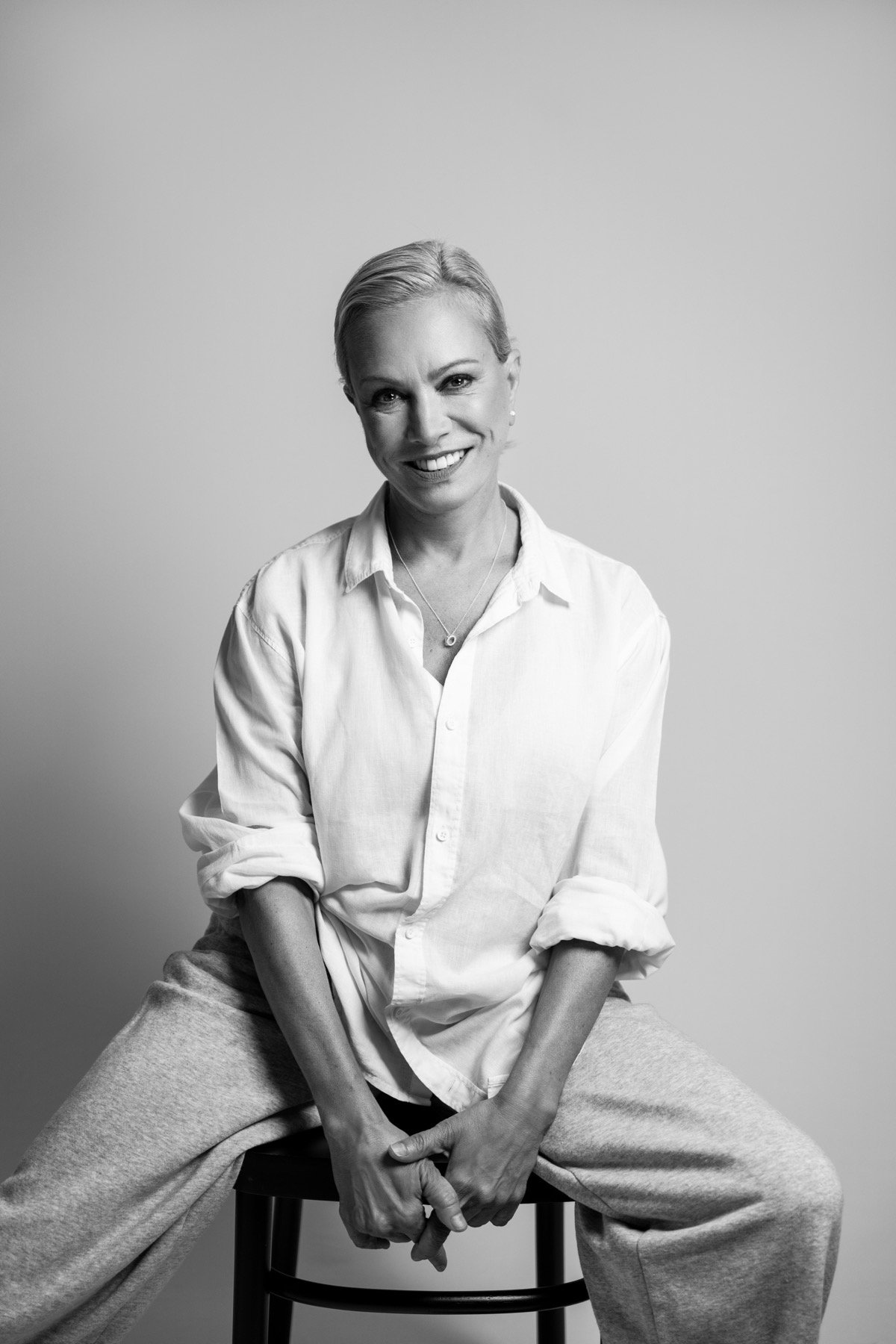
About Dr. Belisa Vranich
From Clinical Psychology to Breathing Science
How a psychologist's search for a better way to help her patients led to a new field — and a nationwide practice that has changed the way people think about breath.

A Lifetime of Studying Breath
As an adolescent, Belisa Vranich would walk past her father on her way to the high school track and see him doing exhale pulsations in the living room, the cat alongside him. Her father — who had walked from Yugoslavia to Italy in 1944 at age twelve with his mother and brother — ran five miles every morning well into old age. He believed that being able to run was a gift that would keep you safe, keep you sane, and keep you healthy. She took that belief with her onto the cross-country and track teams.
The bits of breathing she'd later encounter in yoga fascinated her, but they weren't enough. She went looking for more: classes in New Mexico and Los Angeles, medical documents, sports research, scattered articles on free diving and Russian special operations training.
“My interest in the mechanics of breathing was born a long time ago.”
She earned her doctorate in psychology from New York University and completed her internship at Bellevue Hospital, specializing in neuropsychology and bilingual treatment. She went into private clinical practice in 2000 and served as the Director of Public Education at the Mental Health Association of NYC.
Her therapy practice gradually transformed. Her teaching was always geared toward understanding why and how — the anatomy of the lungs and thoracic cavity, the psychology of anxiety and shallow breathing. Over time, what began as therapy with a recommendation to do breathing became a breathing practice with hints of therapy.
Her first classes were at dojos and martial arts training centers, then with students at UCLA and Swarthmore. The approach was rooted not in mindfulness or meditation, but in biomechanics: how do the muscles of respiration actually work? What does a healthy breath look like, anatomically? And if most adults breathe incorrectly, what would it take to retrain them?
Breathing Class grew out of that question. What began as a clinical practice became a nationwide training program taught at corporations, military bases, hospitals, and universities — including UCLA, NYC Health and Hospitals, the Young Presidents Organization, and the U.S. Department of Justice. She developed the BreathingIQ Assessment to measure breathing quality and the Five & Five program to retrain dysfunctional breathing patterns. Along the way, she wrote five books, including Breathe and Breathing for Warriors.
20+
Years Clinical Research
15,000+
People Trained
5
Published Books
Credentials
Clinical Expertise
Dr. Vranich holds a doctorate in clinical psychology from New York University. She is the founder of Breathing Class and the creator of the BreathingIQ Assessment — the first validated measure of breathing quality — and the Five & Five program for retraining dysfunctional breathing patterns.
Her clients and training programs span U.S. Special Forces operators, Olympic athletes, Fortune 500 executives, first responders, college athletes, and patients at NYC Health and Hospitals. She has lectured at the Young Presidents Organization, the U.S. Department of Justice, UCLA, and Swarthmore College.
The Method
Biomechanics, Not Mindfulness
Most breathing programs focus on relaxation — slow down, calm your mind, visualize a beach. Dr. Vranich's approach is fundamentally different. It starts with anatomy: how your diaphragm, intercostals, and pelvic floor are supposed to coordinate during a breath, and why, for most adults, they don't.
Dr. Vranich's clinical observation is that the vast majority of adults breathe vertically — using their neck, shoulders, and upper chest to pull air in. It's a compensatory pattern that develops over years of sitting, stress, and cultural conditioning. The result is shallow, inefficient breathing that can affect sleep quality, cognitive performance, and lower back pain.
Anatomically congruous breathing — the kind you did naturally as an infant — is horizontal. The diaphragm descends, the belly and lower ribs expand, and the pelvic floor relaxes. Dr. Vranich's method doesn't teach something new. It systematically retrains the muscles and motor patterns you already have, restoring the breath mechanics your body was designed for.
“Dr. Belisa Vranich has developed a cutting-edge technique for reducing stress that translates well across cultures, and is proving to be effective with people who have been profoundly traumatized. Classic and groundbreaking, modern and ancient, it empowers as it heals.”
Dr. Hawthorne Smith — Bellevue/NYU Hospital
“I am in awe of the facility with which Dr. Belisa Vranich translates technical information about the body and breath into simple, fun, yet profound exercises to free life energy and restore health.”
Dr. Jim Morningstar — Director, School of Integrative Psychology
Publications
Bestselling Books
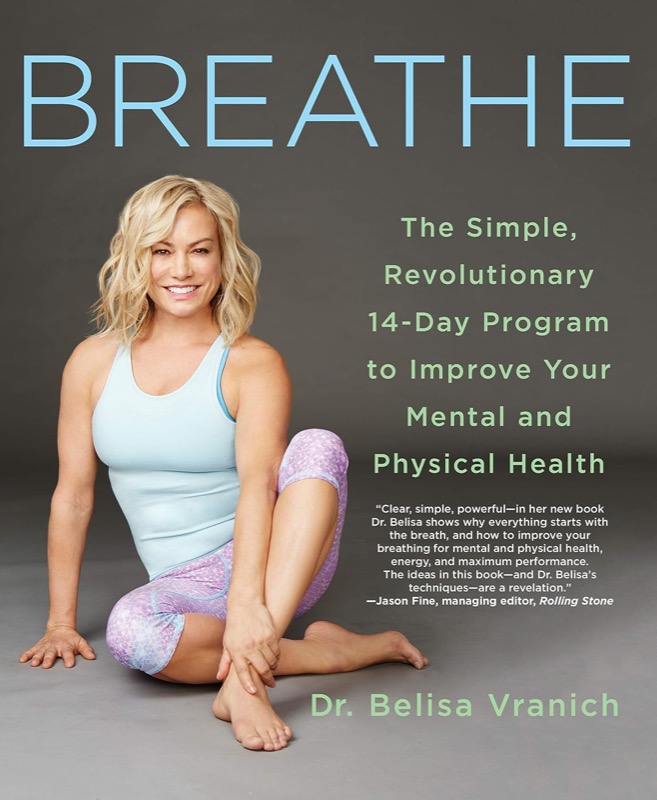
Breathe
The 14-day program that retrains how you breathe. Better sleep, less anxiety, more energy.
Get Breathe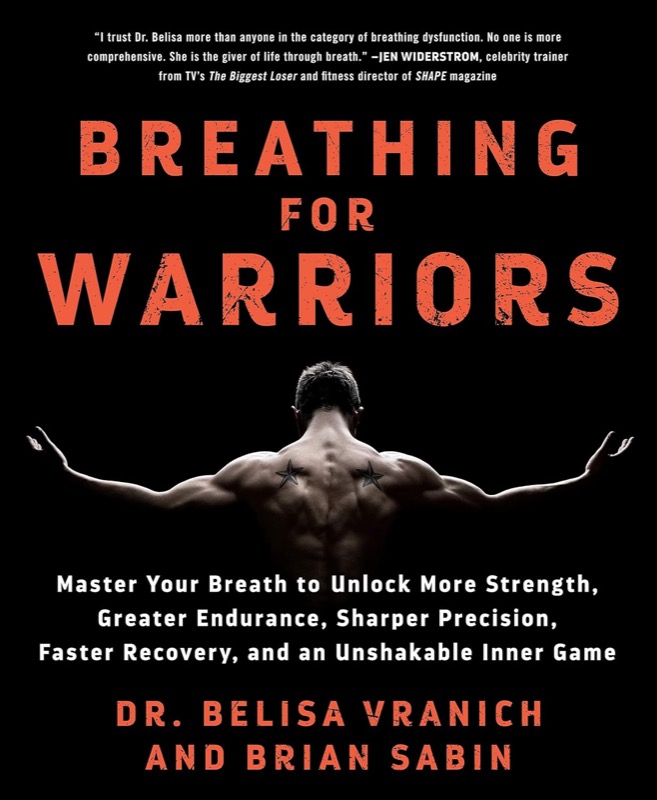
Breathing for Warriors
Field-tested with Special Forces and Olympic athletes. Breath control for peak performance under pressure.
Get Breathing for Warriors“You're not learning something new; you're remembering what you've forgotten.”
Find out where you stand. The BIQ Assessment takes five minutes and it's free.